[ Home ] / [ Journal ]

Journal

Short notes on cloth, hardware and how to look after what you wear.

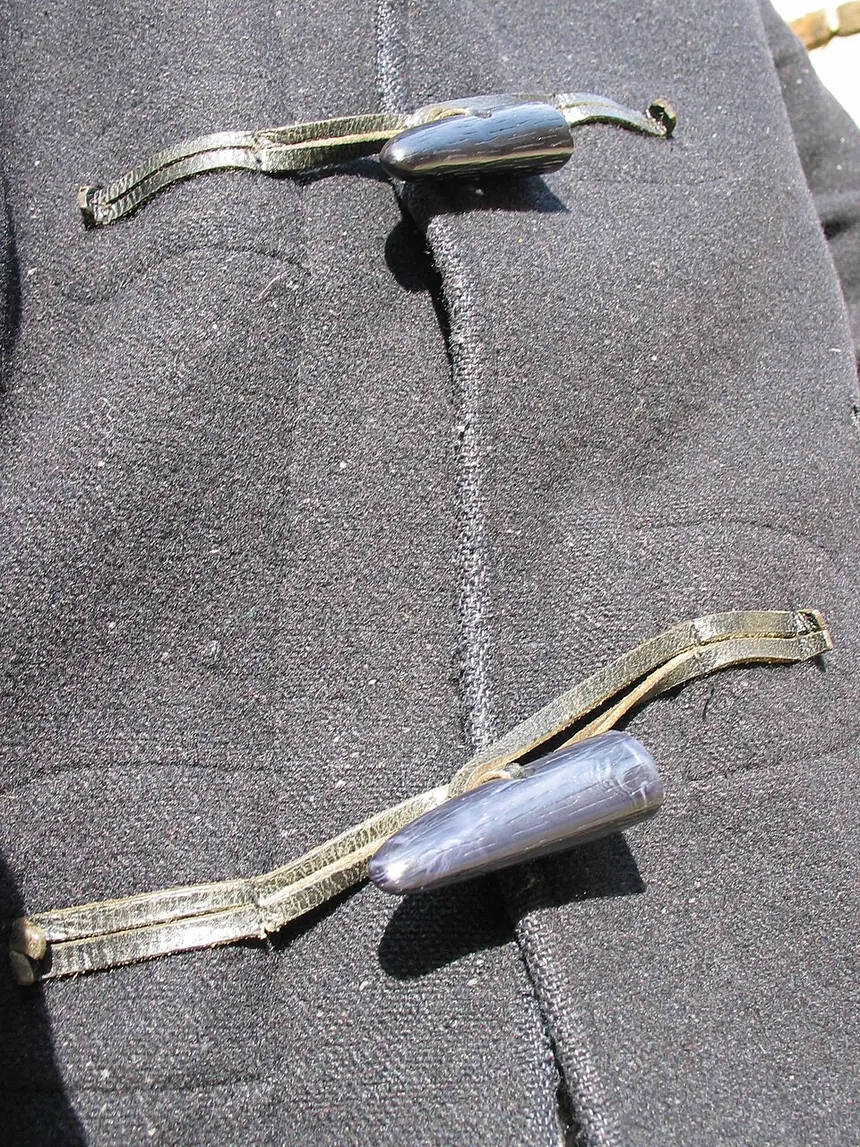
Two toggles on cord loops closing the front of a grey wool duffle coat
Duffle-coat front fastenings. Photo: DocteurCosmos, CC BY-SA 3.0

01 / Cloth

Felted wool, and why a duffle coat feels like a wall

Duffle is a cloth before it is a coat. The name comes from the Belgian town of Duffel, and the cloth is made by working woollen fabric with moisture, heat and pressure until the fibres lock together. That step is called felting, or fulling.

The result is dense and slightly springy, with the weave almost gone from the surface. Wind has little to pass through. Light rain stays on the nap for a while before it soaks in. The shoulders and the hood hold their shape.

It is heavy, and that is part of the deal. You notice the weight for the first week and then stop noticing it.

The toggles belong to the same idea. A toggle on a loop closes with a cold, wet hand or with a glove on, which a small button never will. Our Duffle coat is cut from dense felted wool and closes with four wooden toggles on rope loops.

Looking after it is simple. Brush off dried mud, hang the coat somewhere airy after a wet day, and wash it as rarely as you can. Check the care label before you clean it.
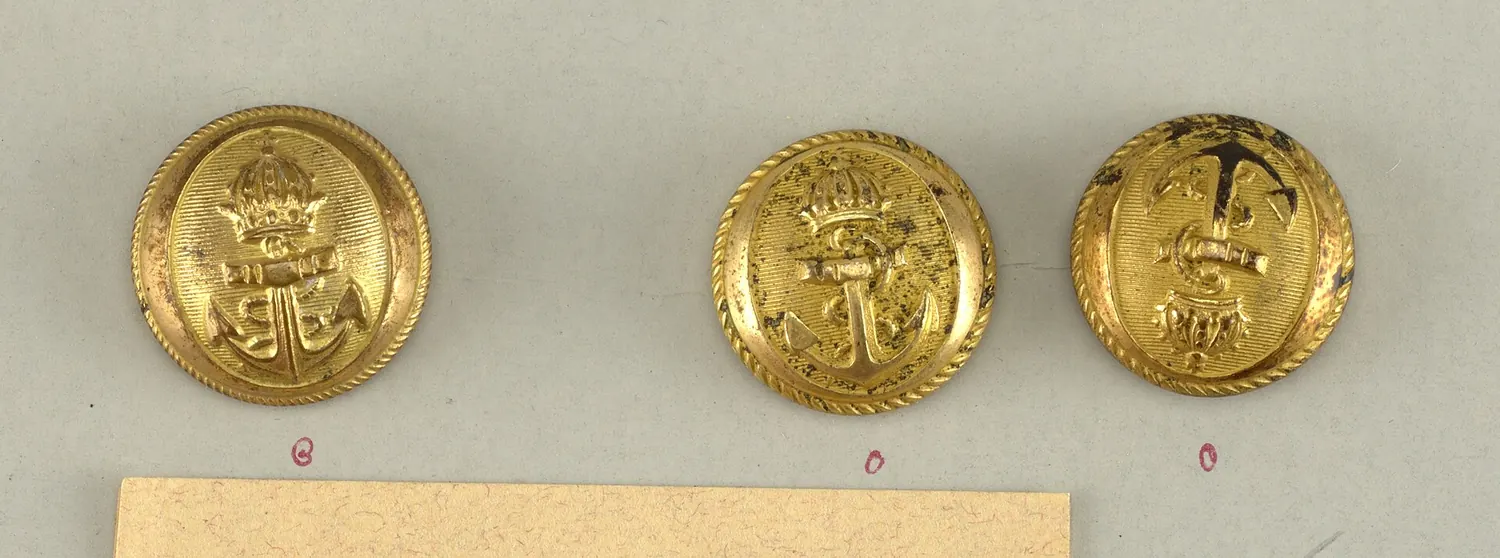
Three brass uniform buttons, each with an anchor in the centre
Brass uniform buttons with anchors, France, 1830 to 1848. Photo via Wikimedia Commons, public domain

02 / Hardware

Brass, and what weather does to it

Brass is an alloy of copper and zinc. There is no iron in it, so it does not rust, which is why boats have carried brass fittings for generations.

It does change. New brass is bright and a little loud. Handling, damp and salt air darken it to a soft brown, and in places to almost black. That is patina. It is a thin surface layer, not a fault.

On a coat, brass does quiet work. Snaps hold a storm flap shut, buttons carry a double-breasted front, a zip pull sits where a gloved hand will find it. Each part is small and each one gets used every day.

Leave the patina alone, or polish it back with a soft cloth and a little metal polish, keeping the polish off the fabric. Both are fine.

Brass in Harbour 01

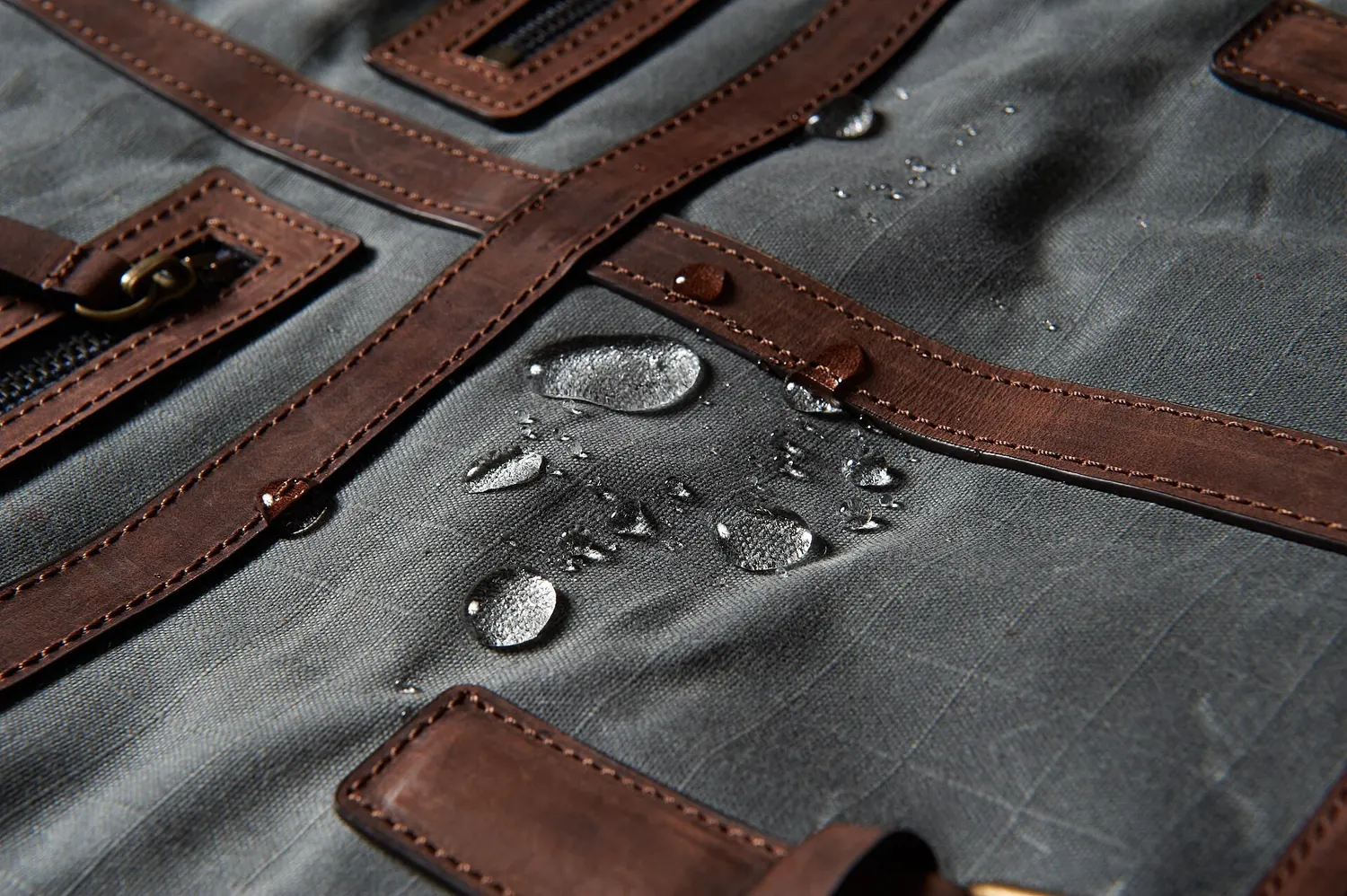
Drops of water standing on the grey surface of waxed canvas with brown leather straps
Water beading on waxed canvas. Photo: David kss7, CC BY 4.0

03 / Care

How to care for waxed cotton

Waxed cotton is closely woven cotton treated with wax. The wax keeps the rain out, so everything you do to the jacket is about looking after the wax. This is general guidance for waxed and oiled cotton. Follow the care label on your own piece first.

  1. Brush, then spongeLet mud dry and brush it off. For marks, wipe with a sponge and cold or lukewarm water.
  2. No soap, no machineDetergent strips the wax. Do not machine wash, tumble dry or dry clean.
  3. Dry it slowlyHang it on a wide hanger at room temperature. Radiators, stoves and direct sun soften the wax and make it run.
  4. Re-wax when it stops beadingSplash a little water on the cloth. If it soaks in instead of beading up, it is time. Warm a tin of wax dressing in hot water, rub on a thin, even coat with a cloth, work it into seams and creases, wipe off the excess and hang the jacket indoors until the wax has settled.
  5. Store it dryHang it loose in a cool, dry cupboard. Never in a plastic bag: trapped damp makes mould.

Expect creases, scuffs and paler lines at the folds. That is the cloth wearing in. Our Waxed field jacket is waxed cotton with a corduroy collar and antique brass snaps.